

Do people still read blogs in 2025? Believe it or not, the answer is yes. A whopping 77% of people who use the internet read blogs. Sure, most people skim, but they are still clicking on websites and ingesting content, so if you wanted to be a leader in your industry, you might want to consider starting a blog.
With AI quickly becoming a day-to-day tool, you might be tempted to type in “You are an expert blog writer, please write a blog on XYZ.” I’ll be honest with you: that probably won’t give you the most valuable results, reliable stats, or good keywords that will actually rank and I’m not just saying that because I’m writer (I promise).
So, here’s a blog all about writing a blog in 2025.
1. Understand your audience
Before you start writing any blog content, you need to understand who your audience is and what they want to know.
Ask yourself these questions:
- Who are they?
- What do they want to know about?
- What problems might they have?
- How can I solve their problems?
- What tone of voice will relate to them?
If you have a marketing strategy, you likely already know these questions and understand your audience. If not, consider carrying out some market research or creating a document with some possible answers to the above questions. You can refer back to this when needed.
2. Keyword research
Keyword research is essential for writing any blog post. You need to write about relevant topics that your audience can find by searching certain terms.
For example, if you’re writing for a website that sells dog food, your audience might be interested in reading about “best food to feed a dog” or “dog food allergies.”
You can do keyword research as you write each article or as part of your wider content plan for the month ahead.
Check out your competition
You should check out what’s currently ranking top in Google for that search. The goal is not to replicate their content but to draw inspiration and understand what elements resonate most with readers in a high-quality blog.
Read a few of the top-ranking blogs and create a similar article but with your own personality and insights.
How do I do keyword research?
The most simple way to find exact SEO keyword phrases that people search for is through Google search.
Type a few different keywords into Google and see what people they are searching for. These questions and phrases can often form secondary keywords which can be used as your headings or subheadings for your blog.
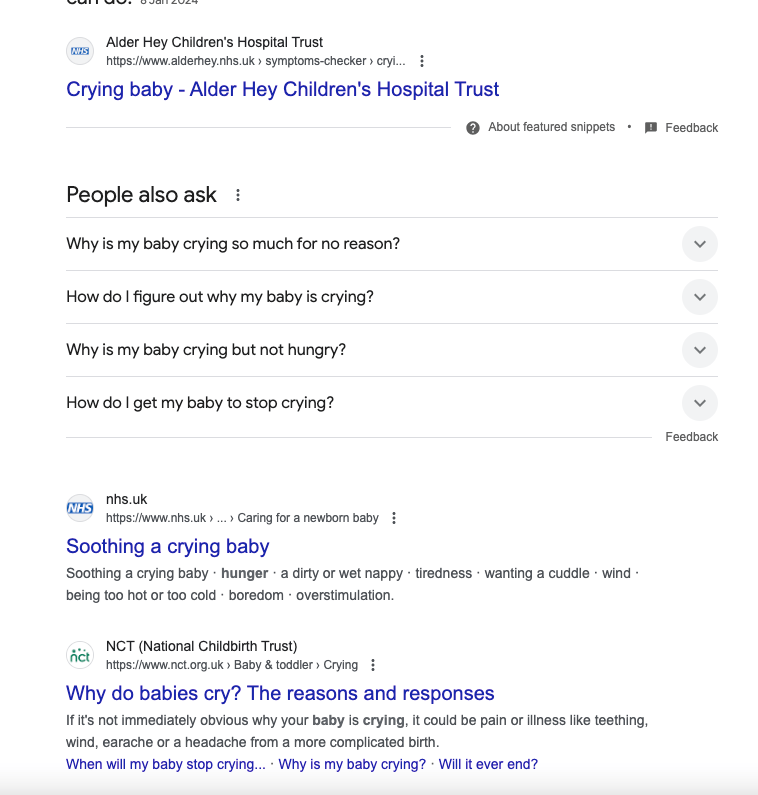
However, you need to target one keyword phrase for each blog article and use different phrases for different articles.
A keyword research tool can help you find relevant SEO keyword phrases with a high search volume. I like to use Google Ads keyword planner to generate blog topic ideas and search for low-competition keywords that we could write a blog on.
3. Find sources
As of recently, Google has changed its goal to rank reliable, helpful content. If you want your target customers to find these blog articles, you must write trustworthy content.
Google recommends writing blogs that include reliable sources and expertise. This can easily be done by adding in some credible sources per article. This could be statistics, research, or expert quotes. Better still, use a combination!
4. Create a blog outline
Before jumping into writing, create an outline for your blog post. This will help you stay organised and ensure you cover all the necessary points.
I like to use a table with two columns: Heading and research.
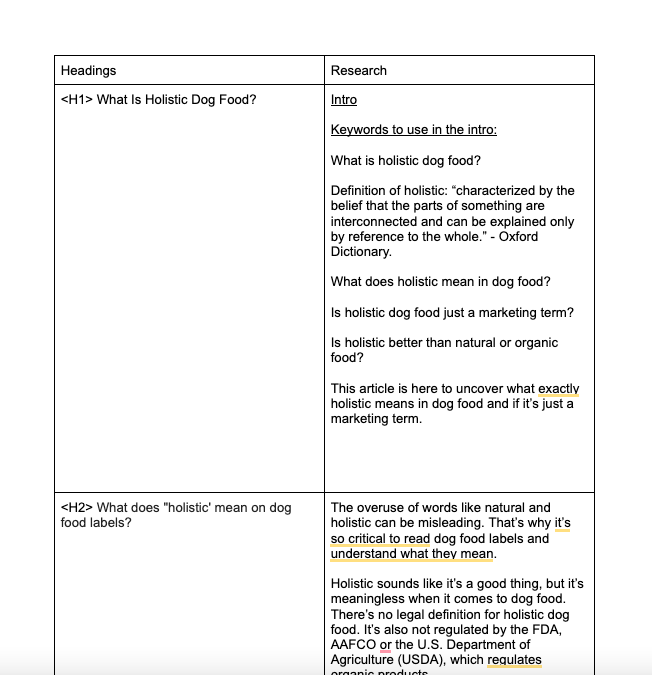
But, you do you. The plan doesn’t have to be extremely detailed but listing out your headings, subheadings and relevant links into a structure will help you out hugely when writing the blog.
5. Write the blog
It’s finally time to write the blog. Focus on getting the information on the page and worry about editing later.
Remember your audience are there to find out information, not read a beautifully descriptive novel. Keep it simple. Use a conversational tone that suits your audience, and avoid jargon and buzzwords (goodbye ChatGBT).
Ensure you stay on topic and answer the search time thoroughly, covering all the important details about the topic. Create skimmable content that people can easily read. This means your blog should be broken down into bite sized chunks including bullet points, spacing and headings.
Make sure to use your target keyword naturally throughout the post. Aim to place it in the following areas:
- Title
- First paragraph
- Subheadings
- URL
- Meta description
- Conclusion
Do not force keywords. Your main keyword should appear 10-20 times and no more.
6. Make it visually appealing
A blog post that looks good will keep readers engaged longer. Break up your text with:
Headings and subheadings to make the content easy to scan.
Bullet points or numbered lists for readability.
Images or infographics to visually support your points.
Short paragraphs (2-4 sentences) for a cleaner, more readable layout.
You can also use formatting tools like bold or italics to emphasize key points and ensure that important information stands out.
7. Optimise for SEO
Beyond keyword usage, there are several on-page SEO elements you need to optimise:
- Meta title and description: These appear in search engine results, so ensure they are clear, concise, and include your target keyword.
- Internal and external links: Link to other relevant posts or pages on your website (internal links) and credible sources or industry leaders (external links).
- Alt text for images: Add descriptive, keyword-rich alt text to all images to help them rank in Google’s image search and improve overall SEO.
8. Edit and proofread
Before publishing your blog post, take the time to carefully proofread and edit your work. Look for spelling and grammar mistakes, as well as ways to improve clarity, tone, and flow. Tools like Grammarly or Hemingway Editor can help polish your content.
I like to edit on a new day or even a few hours later. Don’t underestimate the power of a fresh mind.
9. Publish your article
Once your blog is ready, it’s time to publish it on your website. But don’t stop there — promote it! Share your blog post across social media, include it in newsletters, and ask partners or influencers to help spread the word.
The more visibility your blog gets, the more traffic it will drive to your website.
10. Use AI wisely
How to write a blog using just AI and no brain or heart? I have no idea. And that’s not because I don’t use AI. It’s because I just don’t think it’s possible to write a unique blog with SEO keywords using AI. I also doubt it will rank. Generally, AI blogs are:
- Generic
- All brain, no heart
- Absolutely no humour, which is a bummer for me
- Never trust a ChatGPT statistic or source
It doesn’t have your charm or personality or your expertise.
How to write a blog: final thoughts
If you are’t used to writing, blog posts might seem overwhelming but they can be a really powerful and inexpensive marketing tool. Using the above methods and a little bit of practice can go a long way.
Alternatively, hire an expert SEO writer to take it off your hands.
Oh, hey there! I’m an expert and you cn book your free discovery call today by emailing nualamchughwrites@gmail.com
 nualamchughwrites.com
Leave a comment